

No Breed Needs A
Heavy Hand

If you’ve ever been told:
“That breed just needs a firm hand”
“You have to show them who’s boss”
“They’re aggressive by nature”
You’re in the right place — and you’re not alone.
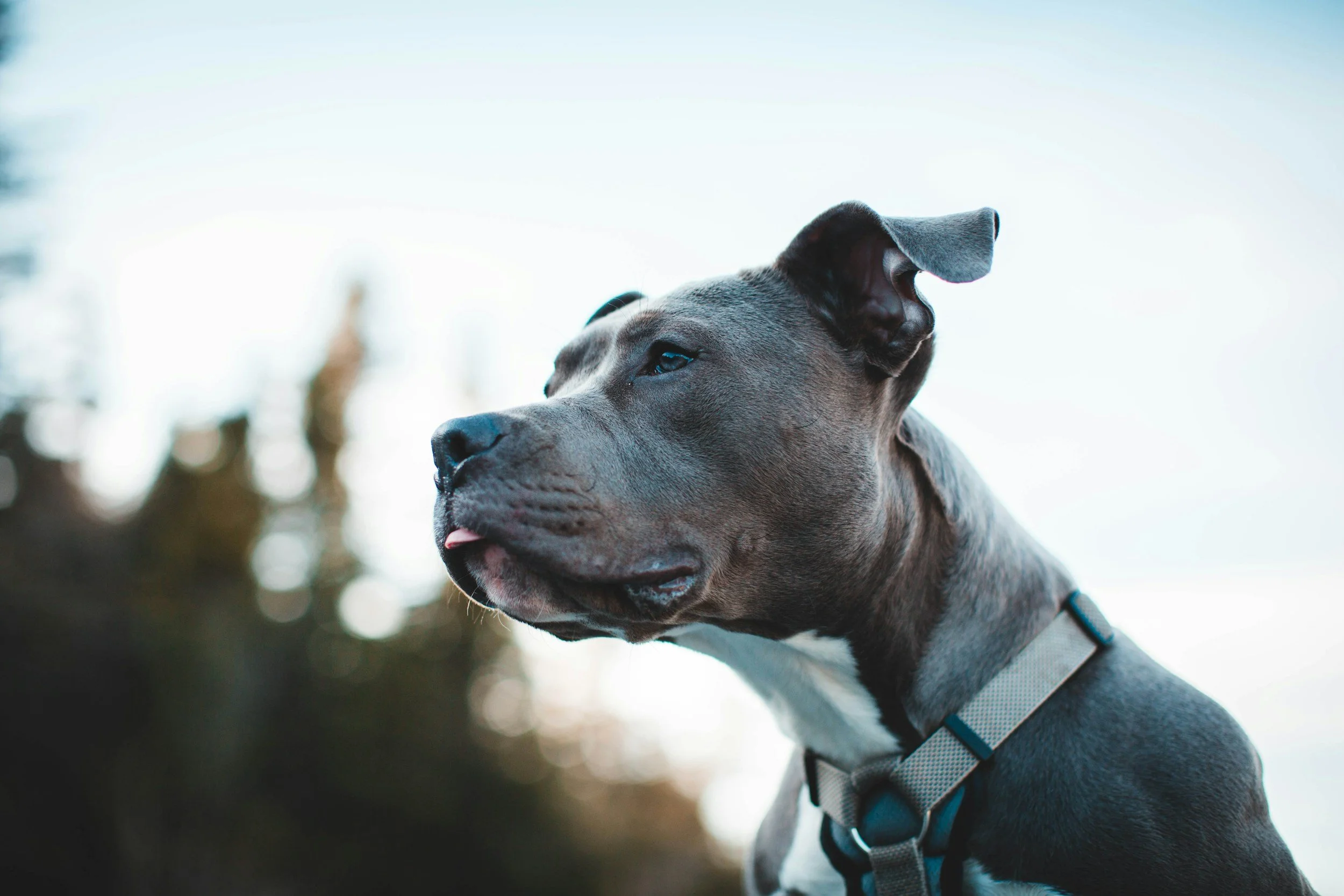
Bully breeds are often misunderstood — labeled as “stubborn,” “dominant,” or “aggressive” when in reality, most bully-type dogs are deeply social, emotionally sensitive, and highly trainable when they are understood and supported correctly.
I am passionate about bully breeds and helping your pup break stigmas and be a good ambassador to the breed. I use force-free training, with a strong focus on helping your dog feel comfortable in the world around them and develop the skills they need to cope with everyday challenges.
Common Challenges I Help With
Leash reactivity
Leash skills, pulling & handler strength concerns
Jumping, mouthing, and impulse control
Prey drive
Aggression or defensive behaviours
Over-arousal and difficulty settling
Negative past training experiences
Public stigma & confidence building for owners
All without punishment, intimidation, or outdated dominance methods.
Compassionate, Force-Free Training for Strong, Sensitive Dogs
FAQ: Do bully breeds need to be trained differently than other dogs?
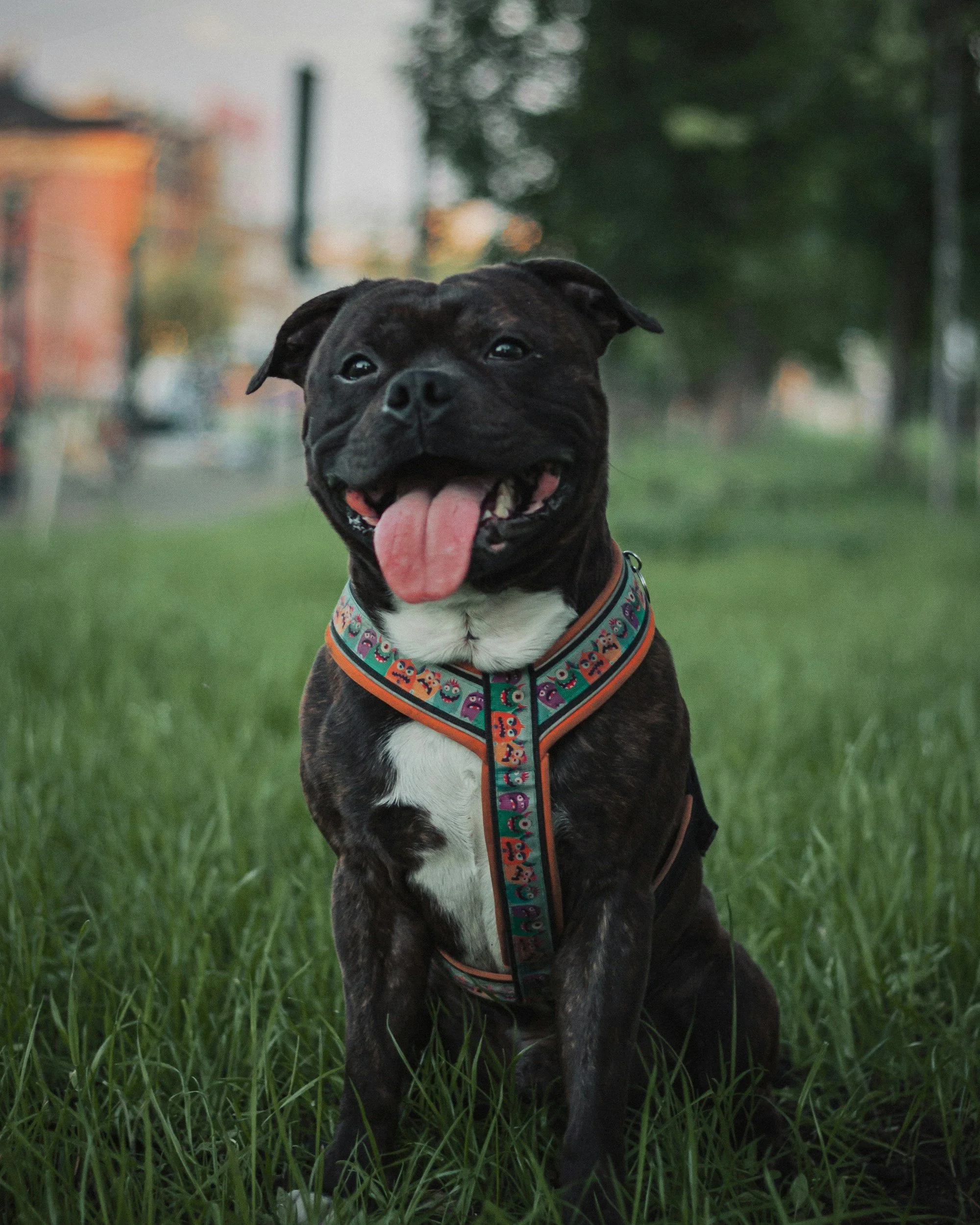
No. All beings learn the same, whether it be a lion, an elephant, a child, a dog of any breed, or a fish. We behave in a way to avoid punishment and move towards reinforcement, so all learners can be “trained” using positive reinforcement. Bully breeds, like other types of dogs, usually come pre-programmed with behaviours that clash with modern life. Border Collies might herd your children, Great Pyrenees might not want to come indoors, Huskies might escape fenced areas and roam the neighbourhood. Likewise, bully type dogs tend to easily become highly aroused, they have trouble disengaging once aroused, some tend to be bitey/mouthy, they engage in rough play styles, they might have a low tolerance for frustration, exhibit strong prey drive, and lack of impulse control.
These behaviours aren’t “bad” — they’re normal, functional traits that helped dogs succeed in specific roles. Problems arise when dogs are expected to live in environments that don’t meet their instincts or emotional needs.
My goal is to give your dog the skills to cope with the world around them, and their handlers the knowledge to help them do so.
I am here for:
- American Bullies
American Pit Bull Terriers
Staffordshire Bull Terriers
American Staffordshire Terriers
American Bulldogs
Bully/Pitty mixes
Boston Terriers
and others
People who feel judged, overwhelmed, or scared of “doing it wrong”
People who want to feel proud to walk their well adjusted bully down the street
FAQ: Can’t I just love my dog and they’ll be good?
Ah, nature vs nurture. While a strong bond is important, dogs — including bully breeds — are shaped by genetics, early experiences, and their environment. When we acknowledge those traits instead of denying them, we can support our dogs more fairly and effectively. Understanding them allows us to set them up for success. Good training helps dogs cope, adapt, and live safely and securely in a world they were not designed for.